
The Component You’ve Seen but Don’t Know: Uses and Applications of Hollow Dowels

Updated: Oct 18
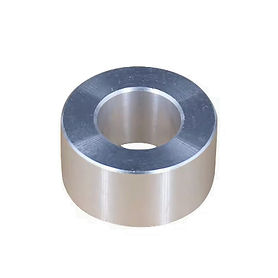
In mechanical structures, automation equipment, and all kinds of assemblies, there’s a simple-looking but crucial part that’s often overlooked: the hollow dowel.
It’s not as eye-catching as a screw, and you probably don’t hear it mentioned as often as nuts or bolts. But when it comes to locating, supporting, and keeping structures stable, hollow dowels often play an irreplaceable role.
---
1. What Is a Hollow Dowel, and Why Do We Need It in a Structure?
A hollow dowel is a locating/support hardware component with a hollow design.It usually looks like a short hollow cylinder installed between two or more parts to:
help align components,
fix the spacing between them, or
act as an auxiliary support.
Unlike common solid dowel pins, the most distinctive feature of a hollow dowel is that the center is empty.
This design is not just for saving material – it exists to meet specific structural requirements, such as:
reducing overall weight,
allowing screws, cables, or other elements to pass through,
combining locating and structural support within a limited space.
In practice, a hollow dowel is not simply a substitute for solid dowel pins.It’s a functional part designed specifically for certain assembly conditions.
---
2. The Role of Hollow Dowels in Hardware Components
In real structures, hollow dowels often serve multiple purposes at once, not just a single function:
Locating:Help parts maintain the correct position during assembly.
Spacing and support:Keep a fixed distance between components and prevent deformation under load.
Auxiliary load-bearing:Take a certain amount of shear or lateral force.
Through-hole function:The hollow design allows screws, wires, air, or fluids to pass through.
Because of this, hollow dowels are often used in positions where you need precise locating, but a solid part is not ideal.
---
3. Common Application Scenarios for Hollow Dowels
Hollow dowels are most often used in places where “parts must line up and must not wobble.”
Whenever multiple parts in a structure need to stack up or align together, hollow dowels help keep their positions fixed.
Common use cases include:
Automation equipment and mechanical modules:Keep modules from tilting or shifting after installation.
Electronic devices and jigs/fixtures:Keep the spacing between parts consistent so every assembly is repeatable.
Automotive and power-transmission components:Reduce positional drift caused by vibration.
Bearings, hinges, and rotating structures:Help rotations stay smooth and stable.
Medical and precision equipment:Maintain high-accuracy positioning in very limited space.
In simple terms: wherever you need something “aligned, stable, and space-efficient,” a hollow dowel is often a great fit.
Hollow Dowels vs. Other Common Components
Component type | Main function | Best suited for |
Hollow dowel | Locating + spacing | When parts must align, and you also need a thru-hole or weight reduction |
Solid dowel pin | Pure locating / load-bearing | Heavier structures, higher load requirements |
Screw | Clamping & fastening | When you need removable or adjustable joints |
Nut / washer | Assist fastening | Distribute load, assist clamping, prevent loosening |
A hollow dowel is not meant to clamp or tighten a joint –its job is to “hold the position”.
---
4. Common Hollow Dowel Materials and Their Characteristics
Different operating environments and design requirements will affect the choice of material for hollow dowels.
Below is a summary of common materials:
Material | Key characteristics | Typical applications |
SUS304 | Corrosion-resistant, stable performance | Humid environments, food equipment, medical devices |
AL6061 | Lightweight, easy to machine | Lightweight equipment, structural frames |
Carbon steel | High strength, cost-effective | Machine tools, general structural applications |
Brass | Good conductivity, wear-resistant | Electronics, electrical components |
PEEK / POM | Insulating, non-rusting, low friction, chemical-resistant (PEEK is high-temperature resistant) | Electronics, medical devices, insulating structures |
Other special materials | Custom materials for heat resistance, chemical resistance, vibration damping | Specialized equipment or custom designs |
Additional notes:
POM (acetal) is often used where low friction, insulation, and reasonable cost are required.
PEEK is a high-end engineering plastic with excellent heat resistance, chemical resistance, and mechanical strength, commonly used in medical, semiconductor, and high-spec equipment.
---
5. Key Points for Selecting and Designing Hollow Dowels
When it comes to real-world design and purchasing, common considerations for hollow dowels include:
Material selection:Choose based on environment, weight limits, and load conditions.
Dimensions and tolerances:Often combined with a mating hole (such as H7) to ensure locating accuracy.
Suitability check:If a structure needs to withstand significant axial tension or heavy loads, a solid dowel pin is usually more appropriate.
Common mistakes include:
Using a solid dowel pin to replace a hollow dowel without considering function
Ignoring the tolerance and fit of the mating hole
Choosing the wrong material, which shortens service life
In one sentence:
A hollow dowel is not a universal part – it’s a functional component designed for specific structural requirements.
---
6. Why Work with Sheng Fong Precision?
At Sheng Fong Precision, we’ve specialized for years in dowel pins, hollow dowels, and various precision hardware parts. We don’t just supply components – we help you use them in the right place.
We can help you:
Decide whether a hollow dowel or a solid dowel pin is more suitable
Recommend appropriate materials (SUS304, AL6061, carbon steel, brass, PEEK, POM, special alloys)
Provide standard parts or support custom specifications
Reduce assembly and structural risks caused by incorrect part selection
Support in-stock items with same-day shipping, where available
📩 LINE:@s9000 — Send us your requirements and we’ll help you quickly find a practical solution.
#HollowDowel #HollowSpacer #LocatingPin #HardwareComponents #PrecisionAssembly#SUS304 #AL6061 #CarbonSteel #Brass #PEEK #POM#AutomationEquipment #MachineDesign #ShengFongPrecision
🔎 Check sizes and stock on the SFP hardware parts platform: Round Spacers


Comments